



Prologue, October 2024
In many ways, I am in absolute free fall. It makes complete sense, of course — breakdowns are breakthroughs, and I am finally awake — aware — and at home in this body of mine. Except when I have fugue states, of course.
I wish I could say I have a plan to make myself less messy, chaotic, and unpredictable. But I can’t. I can’t at all. Because I am living with a serious mental illness. And that — that is inherently, just like me — messy, chaotic and oh so unpredictable.
Now, some of you may be balking at these statements. Most do. I hear it a lot, even from my friends. C’mon, Kate, you work at Harvard. You literally ran a company for five years. You do everything you set your mind to. Please stop saying you are a mess.
But what most people don’t know is this:
I am no longer in a chronic state of fight or flight.
I am no longer a living, breathing, running trauma reaction fueled by pounding, relentless adrenaline.
I am in burnout, complete and utter burnout.
And, because of that, I cannot push through anything like I used to.
I can only work part-time, and even then, I still need the entire weekend to recover in bed.
That fact alone brings up all sorts of self-loathing. It also sets off every cruel voice my mind can conjure – I mean, Kate, what do you do all day? And honestly, what kind of a piece of shit are you if you could push through your symptoms for the dogs, but now you can’t push through to serve people like you, who are actually dying from serious mental illness?
But those voices of self-hatred are not born in truth. They are born in conditioning, years and years of societal conditioning, and even though I often feel like a complete and utter failure because of how exhausted I am right now, I am determined to learn that it is okay.
Yes, I am determined to learn that it is okay to be an exhausted mess because that is honest.
And only when I am honest can I actually heal.
So yup, this is me coming out, so to speak.
This is me coming out as absolutely batsh*t mentally ill.
(Yes, you can laugh at that. Please do, actually. Because we all know this and knew this, but I somehow still need to write it down and proclaim it on the internet because, well, I’m mentally ill. )
Now, for all those who are still curious about what I do all day, me too. I mean, seriously, where do my days go?
My current understanding is that I think — a lot. And write a lot too. But the rest of the time, the hours are lost – lost to fugue states and misadventures that I won’t ever remember unless I one day have a night terror about them.
I’m not going to pretend that reality — rather, lack thereof — is okay or even something comprehensible. It’s not. It also feels downright terrible. But I am still here, unlike so many of my late friends.
So, in their honor and in order to heal so I can live in that honor, I continue. I continue to reclaim – or claim in the first place – all that I survived and fought my way through.
So, at least for now, while I weather these days that often get lost, I am going to practice slowing down and being kind to myself. I am going to practice showing up, oh so messy me, and tackling the process of writing my full story in front of you.
And while I am very much a broken mirror with pieces scattered everywhere, when I write them out, even if they cut me and hurt so very much as I process them, afterwards, they come home to me.
So, this week, I begin that practice. I begin picking up my many pieces and learning to hold them close, sharp edges and all.
And this week, I begin by sharing about my life after Maura and what happened next in the book I hope to one day call: With Love and Wafflenugget.
With Love, and Wafflenugget is the story of how, after being told I’d only survive in a locked psychiatric ward, I rebuilt my life by re-wiring my entire brain. But most importantly, this is the story of how I reclaimed myself, fell in love, and was saved by a dog named Waffle.
For recent newcomers — a quick note
Welcome! I am so grateful that you are here — that we are here together.
Maura was my best friend who is no longer with us after a struggle with bipolar disorder. If you would like to read about Maura and my life with her, and the experiences that preceded this memoir, you can find the full story at the link below.
With Love, and Wafflenugget
Chapter 1. Life After Maura
Human warning: the following piece mentions suicide and depersonalization-derealization. As always, please choose YOU and your well-being first and foremost, so if these subjects could harm you, please DO NOT read it.
I don't remember life after Maura, at least the first bit. I was in a fugue state.
I do remember returning to see my dying therapist, Atlas, though. It was after his colon cancer and fear of death had left him so triggered by my sorrow that he told me, in a messy burst of humanity, that I was a failure — that I had failed him and my parents in every single way.
The whole mess of that appointment had resulted in my suicide attempt, and there’s no way to dice it differently. The entire thing was a downright disaster.
But I couldn’t process that truth at the time. I was still hallucinating, losing time to fugue states, and lost in a fog of intense antipsychotics. So, believing I had to go or I’d be sent to a locked residential ward, I went back to see him as my therapist after I got out of the hospital.
The whole appointment played out like a bad dream. My body was so ravaged from the prior few weeks — the fugue states, the suicide attempt, the psych ward stay, and Maura’s passing — that as I entered his office, I slipped into a state of what I now know was derealization.
Derealization, for me, meant I watched my life from above. It meant I became the little girl I used to be, the one who played with her dollhouse. Except this time, I watched myself be the doll. I was the doll. Or wasn’t I? I didn’t know. Either way, that doll or I? was small, timid, and inexplicably fragile. She acted out life instead of living it. She was there, but she wasn’t, all at the same time.
From above, I could see it clearly. Atlas’s cancer was taking him, and taking him soon. His clothes hung loosely. His belt did too. It was pulled to the smallest point, and still he kept grasping — grasping to keep his pants up and on his waist.
Atlas welcomed me to his office like he always did. He strode over and went in for a hug. And even though I or the doll cowered as he approached, he still pulled me in for a forced embrace, completely detached and unaware of how violating it felt — a truth the old Atlas would never have overlooked.
And then, we began — I, on the couch. He, in his rocker. Us, in our usual positions.
Except this time, it was just he who began.
Without a single mention of the last appointment, his past outburst, and the cruel remarks about how I was failing him and my parents, he just talked. Actually no. He just preached and proselytized — telling me over and over that even if I had told everyone in the hospital that I hadn’t attempted, he knew the truth, but he could forgive me for what I had done. Yes, he could forgive me for what I had done, and even if I didn’t deserve it, he would give it because he was that kind.
I wish I could say that right then and there, I called him out on his own survival mode and the cruelty it was creating.
Yes. I wish I could say I stood up and left once and for all in that moment.
But I didn’t.
I didn’t say a word. A single word, all session.
I just listened. I just sat there. I just held space. Head bowed, in quasi-prayer, taking it all because I knew the truth that he refused to admit.
He was dying.
When his sermon finally ended, and the 90-minute session that had dragged on and on finally came to an end, I rose and attempted a hurried exit. But, as I crossed the room in a scamper of steps, he grabbed my right wrist before I could make it to the door. Holding it firmly, he waited until my lowered head raised.
I finally met his gaze and was surprised by what I found. There was a lightness to it — one that wasn’t there all session — one that was like the old Atlas I knew and loved so dearly.
Kate, that thing we talked about a few weeks ago. You moving? You must do it. Okay? You must. Sign the lease. You have to stop hiding your beautiful self from this world. Promise me you will do it.
His pressured remarks caught me off guard. They were practical. They were out of concern. They were actually reminiscent of the old Atlas I knew — the Atlas that had offered me a lifeline in high school when I was depressed — the Atlas that had celebrated every word I’d ever written and invited me into his grad school writing program free of charge.
Yes, this was the Atlas who drove two hours to Middlebury to pick me up and two hours back to admit me to the unit when my parents were abroad and my psychotic suicidality grew too severe. This was the Atlas who had earned the words I wrote to myself before getting electroconvulsive therapy at age 20:
Atlas knows everything. You can trust him with your life.
Yes, this Atlas was the man who had guided me lovingly through years and years of darkness. So, even though his remarks from mere weeks ago had broken me so aggressively that I had attempted suicide for the first and only time in my life, I chose to honor him, the man he used to be, and I pleasantly agreed.
And with that, his cold, bony hands released their grip, and for the first time in eight years, I or the doll left without giving him a hug.
I made good on my promise. I signed the lease to move into downtown Hanover, New Hampshire, that very day. My apartment at the time was tucked away in the woods in solitude, in refuge, in quiet — it was a hideaway that honored my fear and the closest thing to safety I knew in a world filled with hallucinations and paranoia. Despite all that, the move soon became one of Atlas’ greatest pieces of advice that I ever turned into action.
Of course, moving didn’t feel that way at first. It felt the opposite, in fact. For the move was when the lies – my many lies about how “okay” I was – gave out, and when my parents fully realized how alone I truly was in the world.
It all came to a head when I had to be out of my apartment and into the new one by the end of the weekend. I had moved everything I could move on my own already – clothes, dishes, chairs, toiletries – by Friday. But without Maura, I had no one to ask to help me move my bed and the two little couches. Just like my last move, I had no one to help me except for my parents.
I had a grade-A breakdown before I summoned the courage to ask them. Fists pounding til they bled on freshly cleaned floorboards. Hysteria so loud that even the chickadees stopped chirping. But no amount of weeping or screaming or cursing the world and what it had done to my late best friend could change the fact that I had no one in my life except the people who had made me, to help me lift my sofa.
After a few quick paces to gather myself around my near-empty living room, I picked up my phone and dialed the only number I’ve ever known by heart – home.
My dad answered, and after hollow pleasantries, I mustered the strength to ask for his help moving my furniture that very weekend. He paused for a moment or two and then kindly asked what any normal dad might: of course, I’d love to, but what about your friends, sweetie? Might they help? My back has just been acting up so much lately.
It was an ordinary question. It was so simple. And yet, it was also so damning.
I opened and closed and opened and closed my mouth. No words came out. No explanation could even make sense of this — how all the things I had said to protect them from my pain were lies, complete lies. So there, in the lingering silence, one that exemplified everything broken that I had become, my dad realized why I had asked him in the first place, and right then, over the phone, the entire house of cards fell.
With a sharp inhale that carried across the line, he realized that his daughter, who he finally thought was doing better after a decade of suffering – who finally had a job, a new therapist, and a second chance at life outside a psych ward, had no friends to speak of. No friends at all.
In panic, he tried to backtrack. He said his back was actually fine. He said he’d just overdone it exercising that day and that he would love to. But even though I appreciatively accepted the kind offer and his enthusiastic change of heart, I knew the damage was done. And after saying goodbye, he didn’t hang up fast enough so I heard it too.
Yes, before the line clicked, I heard him descend into gut-wrenching, truly soul-quaking sobs.
To keep reading, join us for Chapter 2, below:


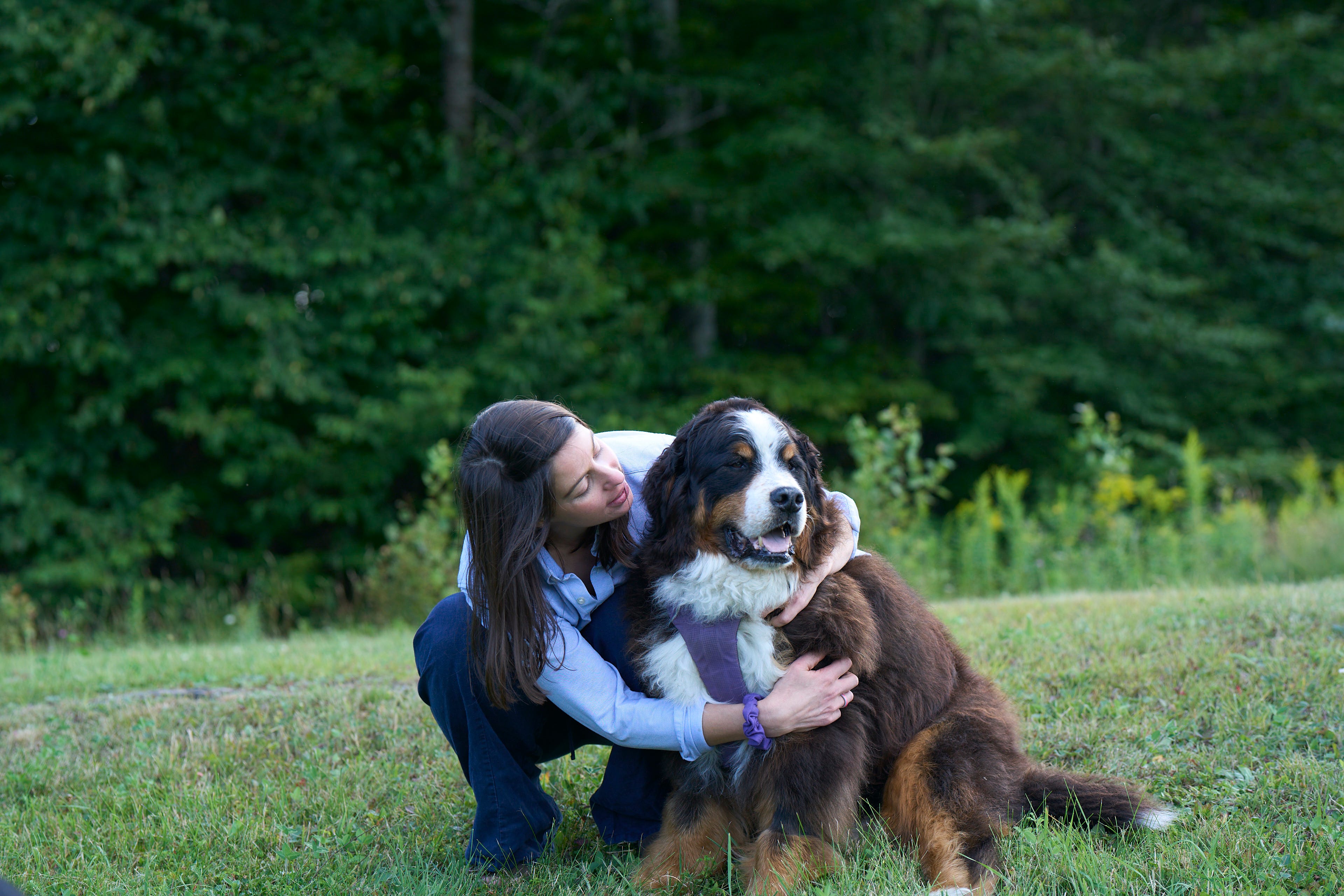
And with these fluffy, cute faces, we send love and deep hope that you are staying kind to yourself.
Since recently I have been struggling with that a lot, and it is really hard to do, I thought I’d end this week’s newsletter by sharing my new practice for infusing self-compassion into my day. I begin morning pages with these words.
May they offer you a bit of refuge as you weather the world too:
~
it is hard to be human.
it is so very hard to be human.

and as long as we are honest
and kind,
there is no wrong way to do it.

so today,
yes today,

may you be human.

and may you remember
that it is hard to do so

so however you do it,
yes, however you do it,

it is enough.
it is forever and always enough.
~
And with that, I wish you a day.
Kindly,
Kate
Love you. Always here if you need a bandaid. Have you heard of the other Japanese art, gyotaku, where they paint a fish and then press paper on it to make a print? Maybe you could do a human version (messy, I know). You could put paint on yourself and lie down on a big piece of paper. I bet when you look at that print, you’d see how beautiful you are, kintsugi places, and all.
Holy damn, you’re amazing, Kate. Thank you for sharing. I am very glad to have found you and your work and your truth. Which the world needs.